
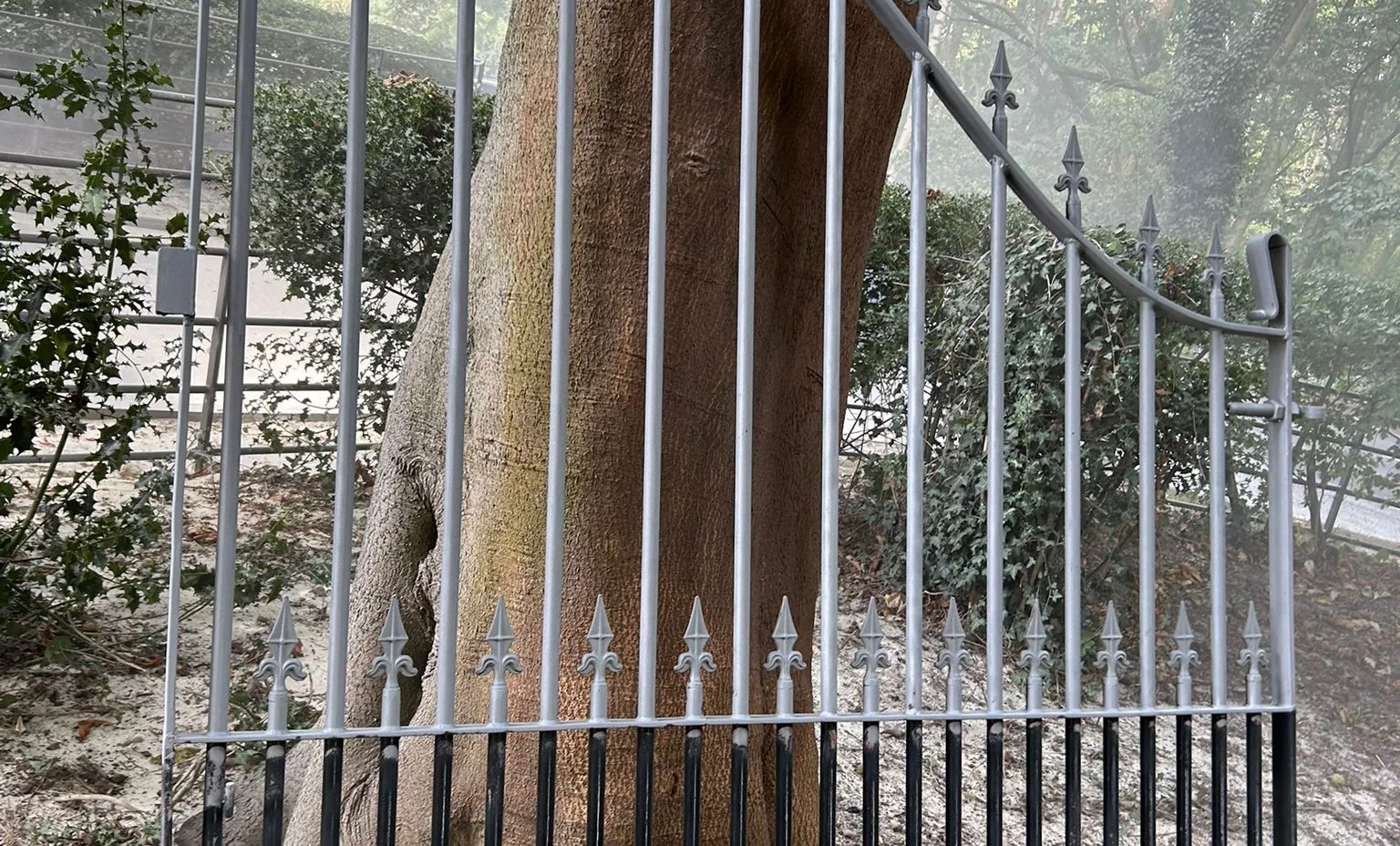
If your gates, railings or metal garden furniture are looking tired, it’s usually not because the metal is “finished” — it’s because the surface protection has failed.
Across Wolverhampton and the wider West Midlands, we see the same pattern again and again: cracked paint, bubbling patches, rust streaks, flaky layers, and that chalky look that makes even good metalwork seem beyond saving. The good news is that most of the time, it is salvageable — and a proper clean-back plus the right coating system can give it a long second life.
This post explains what’s really going on when metalwork deteriorates, why quick fixes don’t last, and what a professional restoration process looks like.
The real reason your metalwork keeps rusting back
Rust doesn’t “appear” out of nowhere. It starts when moisture and oxygen reach bare metal.
That happens when:
- paint has cracked and water gets underneath
- old coatings have lifted at edges, joints, welds, and decorative scrolls
- previous prep was poor (painted over dirt/rust, or the metal wasn’t keyed properly)
- the metalwork sits in constant damp/shade, or gets hit with road spray and winter grime
Once corrosion starts under a coating, repainting over the top usually just traps the problem in — it looks better for a short time, then fails faster.
Why wire-brushing and “rust paint” often disappoint
DIY methods can help on very light surface rust, but they struggle when:
- there are multiple paint layers
- the rust is in pits and creases
- the metal has detailed patterns, rivets, welds, corners or expanded mesh
- you can’t realistically get every weak edge and flake off
The failure point is nearly always the same: you can’t get a consistent, clean, stable surface everywhere, so your new paint system only bonds properly in some areas.
What professional restoration looks like
A proper job isn’t just “make it look clean”. The goal is to produce a surface that coatings can actually bond to — consistently — so the finish lasts.
Here’s the typical workflow we use for metal gates, railings, balconies, garden furniture, brackets and fabricated steelwork:
1) Inspection and honest assessment
We’ll look for:
- perforation (holes through the metal)
- weakened sections around fixings and welds
- movement in posts or rails
- previous repairs and filler
- paint types and thickness
If sections are too far gone, it’s better to repair/replace those pieces first, then prep everything properly.
2) Protection, masking and dust control
Good prep isn’t just about the metal — it’s also about not making a mess of everything around it.
Depending on the job, we’ll:
- mask brickwork, stone, glazing, paving and nearby vehicles
- use screening or containment where required
- control spread, especially in tighter residential areas
3) Surface preparation (clean back to a stable base)
This is where most “repaint” jobs fall down.
Professional blasting preparation removes:
- flaky paint
- stubborn coatings
- corrosion and scale
- grime that stops primers bonding
It also reaches into:
- corners, joints and overlaps
- decorative details
- textured or pitted areas
4) Immediate priming (this matters more than people think)
Once metal is properly cleaned back, it’s vulnerable. Leave it exposed too long and you can get flash rusting depending on conditions.
That’s why timing and primer choice matter. A quality primer system is what stops the job becoming “a repaint” and turns it into a restoration.
5) Topcoat or finishing system
This depends on how the metalwork is used and where it sits (front boundary vs sheltered garden area, coastal exposure, etc.).
Typical options include:
- durable exterior paint systems (properly layered)
- coatings designed for heavy weathering and frequent handling (gates, railings)
- preparation for powder coating (if the item is being sent for coating off-site)
If you’ve ever had a gate repainted that looked great for a year then started bubbling again, the missing piece was almost always prep and primer compatibility, not the final colour.
On-site vs off-site: what’s best?
Some metalwork can be restored in place; other jobs are better taken away.
On-site restoration can be ideal when:
- it’s fixed into masonry and removal would damage brickwork/stone
- the item is too heavy or awkward to transport
- you need a tidy turnaround without dismantling
Off-site restoration can be better when:
- you want an ultra-smooth finish and controlled coating conditions
- it’s small enough to transport safely
- there’s extensive damage and welding/repairs are needed
We’ll always tell you plainly what’s sensible — not what’s most convenient for us.
How long should a properly restored finish last?
There isn’t one magic number, because it depends on:
- exposure (open front boundary vs sheltered area)
- how water drains off the design (flat ledges collect moisture)
- coating system used
- maintenance (a quick wash and check once in a while makes a difference)
But the honest rule is: if the metal is properly prepared and correctly primed, your finish lifespan increases dramatically compared with “paint-over” jobs.
Quick maintenance tips that actually help
You don’t need to baby it — just do the basics:
- rinse off grime occasionally (especially near roads)
- keep hinges and latch areas clean and moving freely
- touch in chips promptly (chips are where rust starts again)
- avoid letting plants sit against metalwork constantly
Common questions we get
“Will blasting damage my gate or railings?”
Not when it’s done properly. The whole point is controlled, professional preparation — not chewing metal away. The approach is matched to the thickness and condition of the steel.
“What if there’s old lead-based paint?”
Older metalwork can have historic coatings. That changes how the job should be handled (and how debris is controlled and disposed of). If it’s a possibility, we plan accordingly rather than guessing.
“Can you do this without wrecking my driveway/paving?”
Yes — protection and containment are part of doing it professionally. If a contractor isn’t talking about masking and control, that’s a red flag.
Need your metalwork restored in Wolverhampton?
If your gates, railings or metal furniture are flaking, rusting or just overdue a proper refresh, we can advise the best route: restore in place, remove and refurbish, or repair and then refinish.
Call: 07970 566 409
Email: info@wolverhampton-sandblasting.co.uk